AI Agents for Earth Observation: Talk and BoF at BiDS 2025
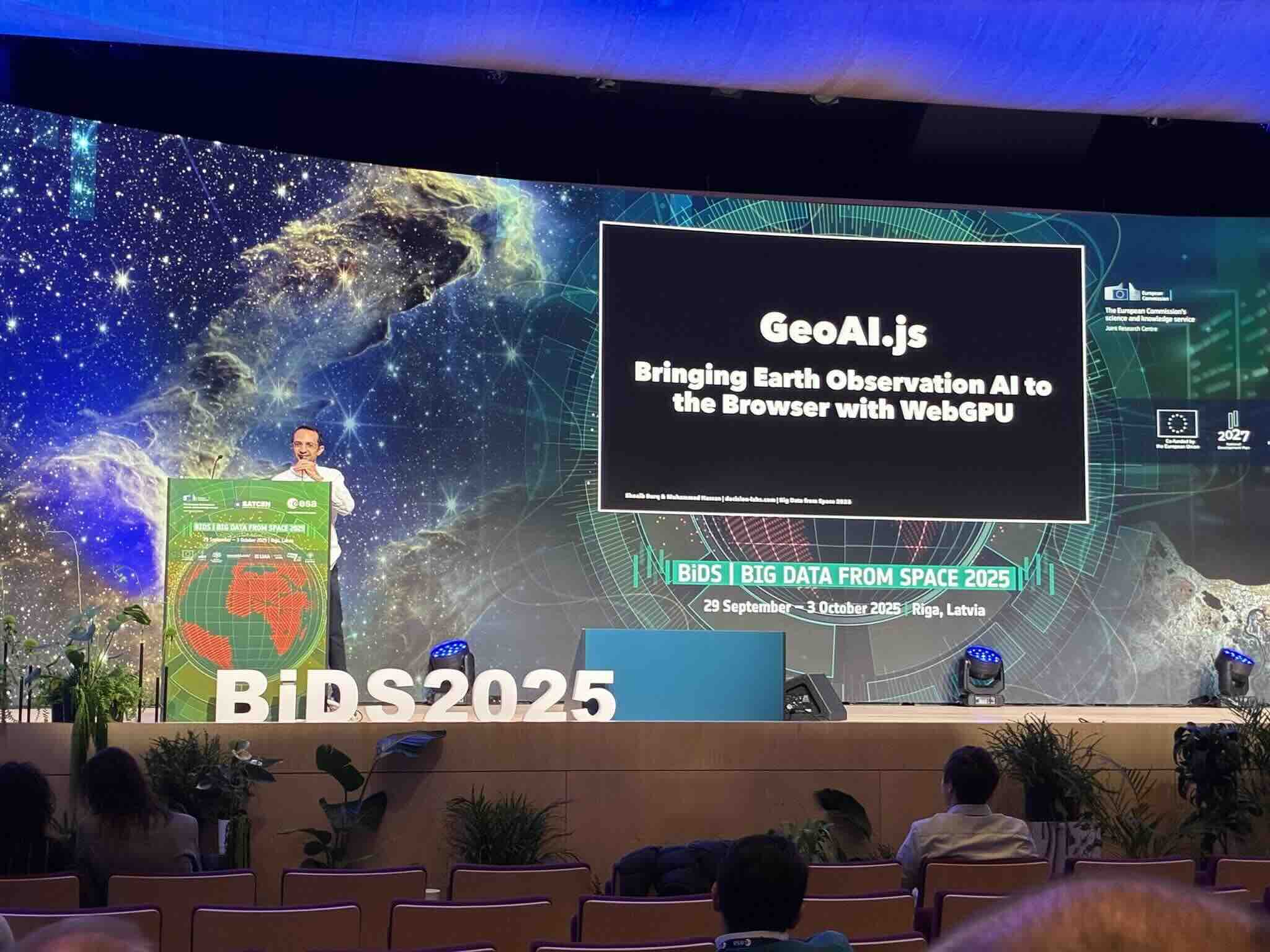
At Big Data from Space 2025 (BiDS) in Riga, Latvia, we ran two sessions on agentic AI for Earth observation: a talk on how agents work in EO, and a Birds of a Feather (BoF) session to start community work on open specifications.
The talk
Agentic AI for Earth Observation | S. Burq & M. Hassan, Decision Labs
View the full slide deck on Speaker Deck →
How agentic AI works: a primer for Earth observation
The talk had four goals:
- Introduce the concept of agentic AI
- Explain how agents work
- Provide examples of EO-related agents
- Call to action for collaboration on open EO agents
Motivating example: EarthGPT.app
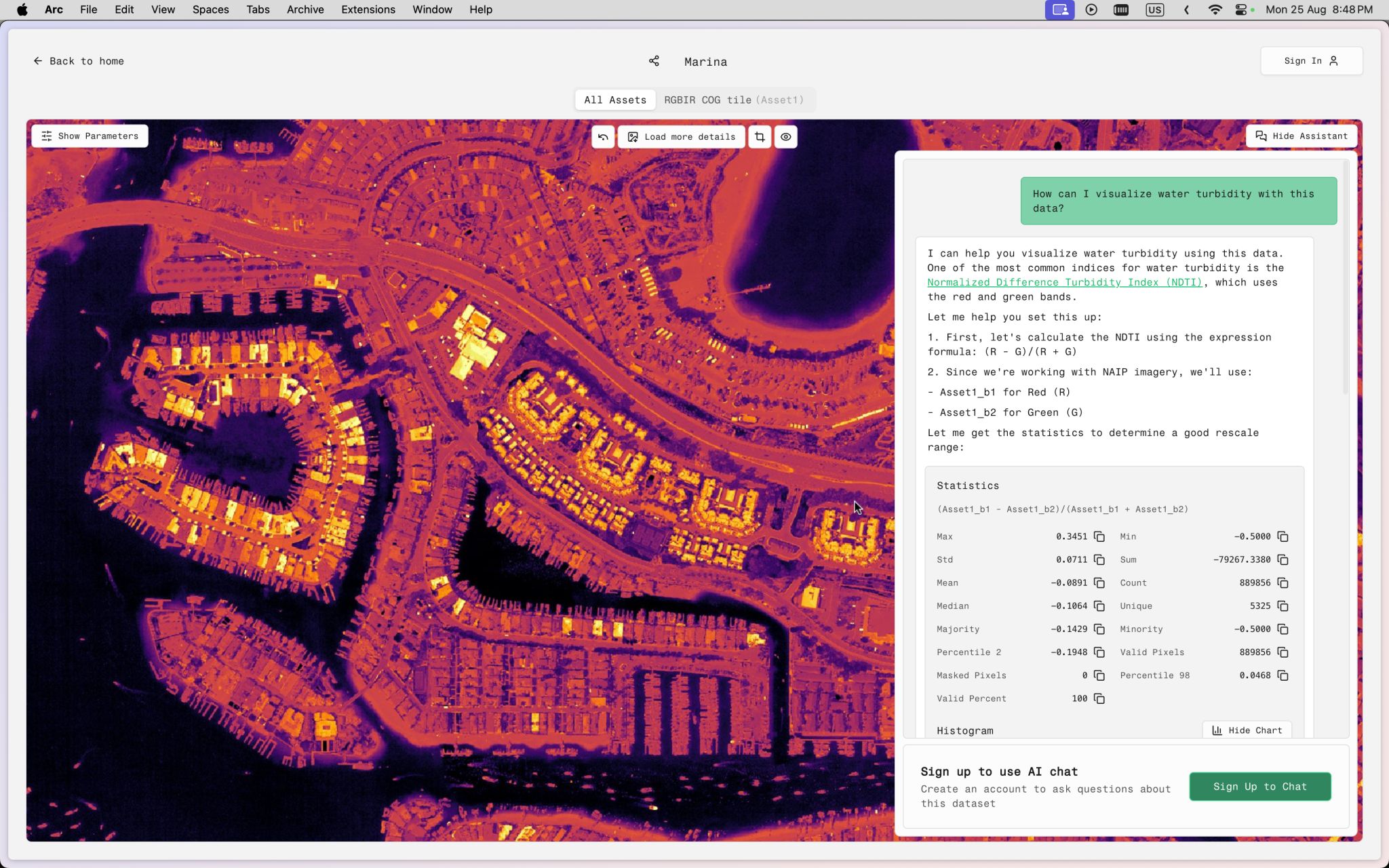
Our starting point was EarthGPT.app, a conversational interface for EO tasks. It shows what agents can do when they have access to a geospatial toolbox.
Introduction to agentic AI
The talk introduced a vocabulary that is becoming standard in agentic systems:
- Tools
- Agents
- Workflows
- Memory
- Evals
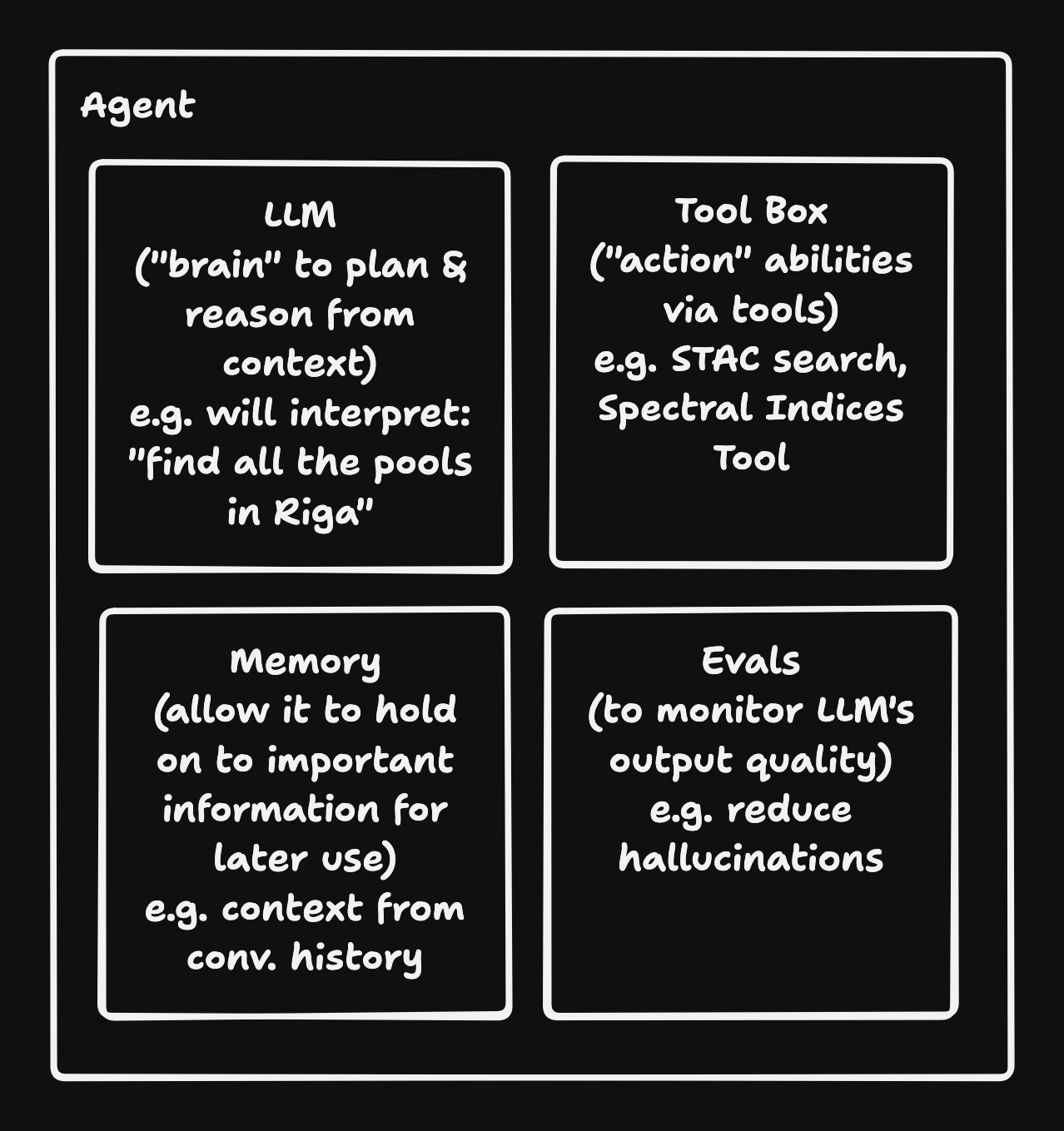
An agent is an LLM-driven planner. Given a user goal, it decides which tools to call and in what order. The user does not wire each step manually.
Travel planner workflow
To make this concrete before moving to EO, we used a simple travel example, the kind of question anyone in Riga might ask:
"I am in Riga today, can you suggest some places to visit and what should I wear?"
The agent's toolbox for this task:
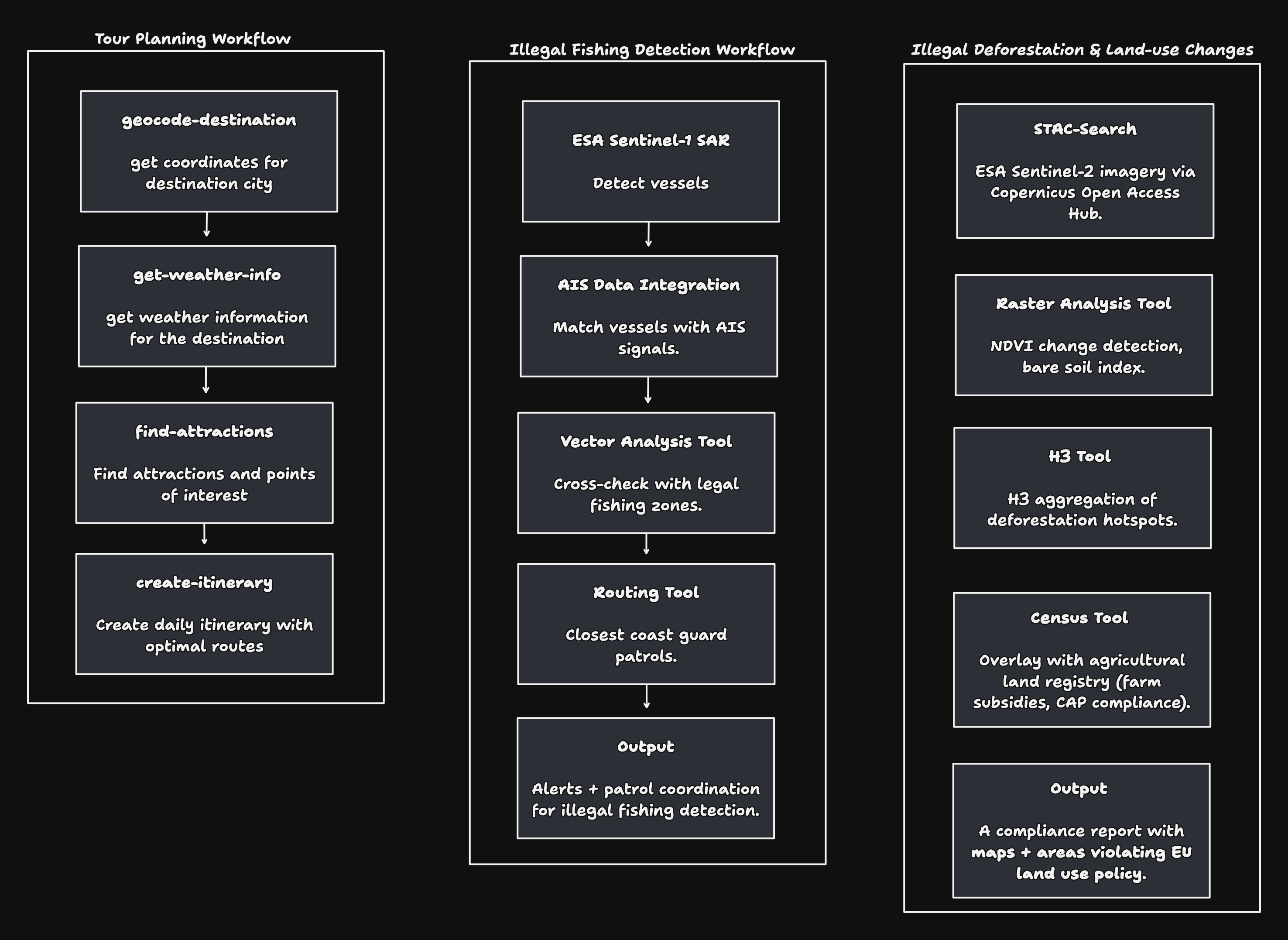
geocode-destination(): get coordinates for the destination cityget-weather-info(): get weather information for the destinationfind-attractions(): find attractions and points of interestcreate-itinerary(): create a daily itinerary with optimized routesgenerate-tour-summary(): generate a tour summary with recommendations
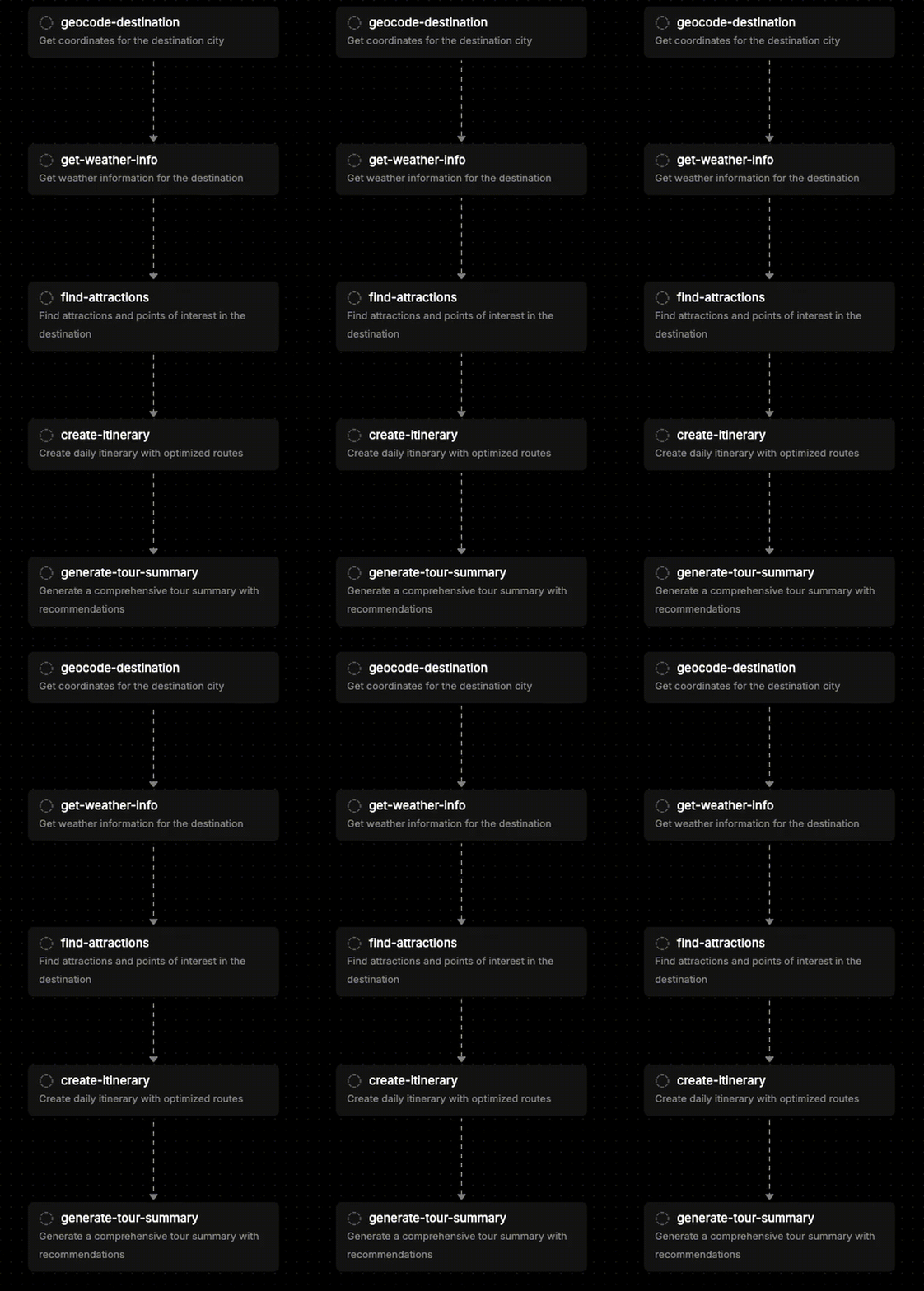
The LLM plans the workflow and calls the tools in the correct order: geocode-destination() → get-weather-info() → find-attractions() → create-itinerary() → generate-tour-summary().
The same pattern applies to EO: the user states a goal, the agent assembles the pipeline.
EO-related agent examples
The deck lists agent types that map onto real EO work:
- Catalog Agent: searches satellite archives (Copernicus, Sentinel, Landsat)
- Database Agent: queries PostGIS and vector DBs
- File Agent: loads GeoJSON, shapefiles, NetCDF datasets
- Imagery Agent: processes SAR, multispectral, and hyperspectral data
- Forecasting Agent: predicts weather, climate, and crop yield using ML/ARIMA
- Visualization Agent: plots maps (Deck.gl, Leaflet, Mapbox, Kepler.gl)
- Vision Agent: detects objects in images (cars, buildings, vessels, crops)
A single user request can involve several agents working in sequence or in parallel.
Tools: the arms and sensors of an agent
Tools are how agents interact with the world. In EO, they fall into four types:
- APIs: geocoders, routing, catalog services
- Models: vision, multimodal, forecasting
- Commands:
gdal,ogr2ogr, and other CLI geospatial tools - Data access: STAC catalogues, vector databases
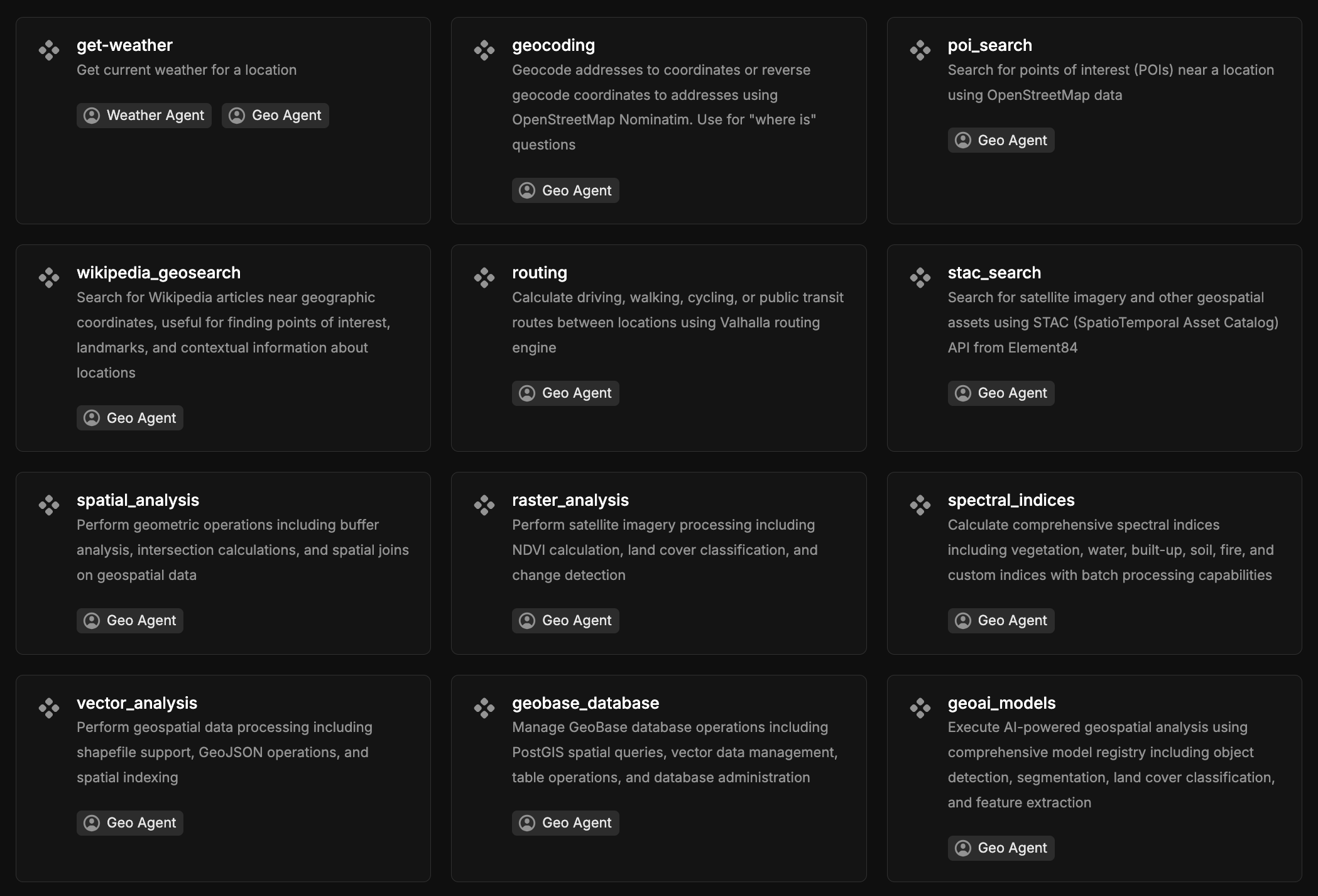
We highlighted geoai-sdk as an open toolkit that wraps many of these capabilities into a consistent interface agents can call.
Multi-agent topology
Complex EO tasks rarely involve a single agent. Multi-agent systems coordinate specialised agents (catalog search, imagery processing, vector analysis) under a planner or orchestrator.
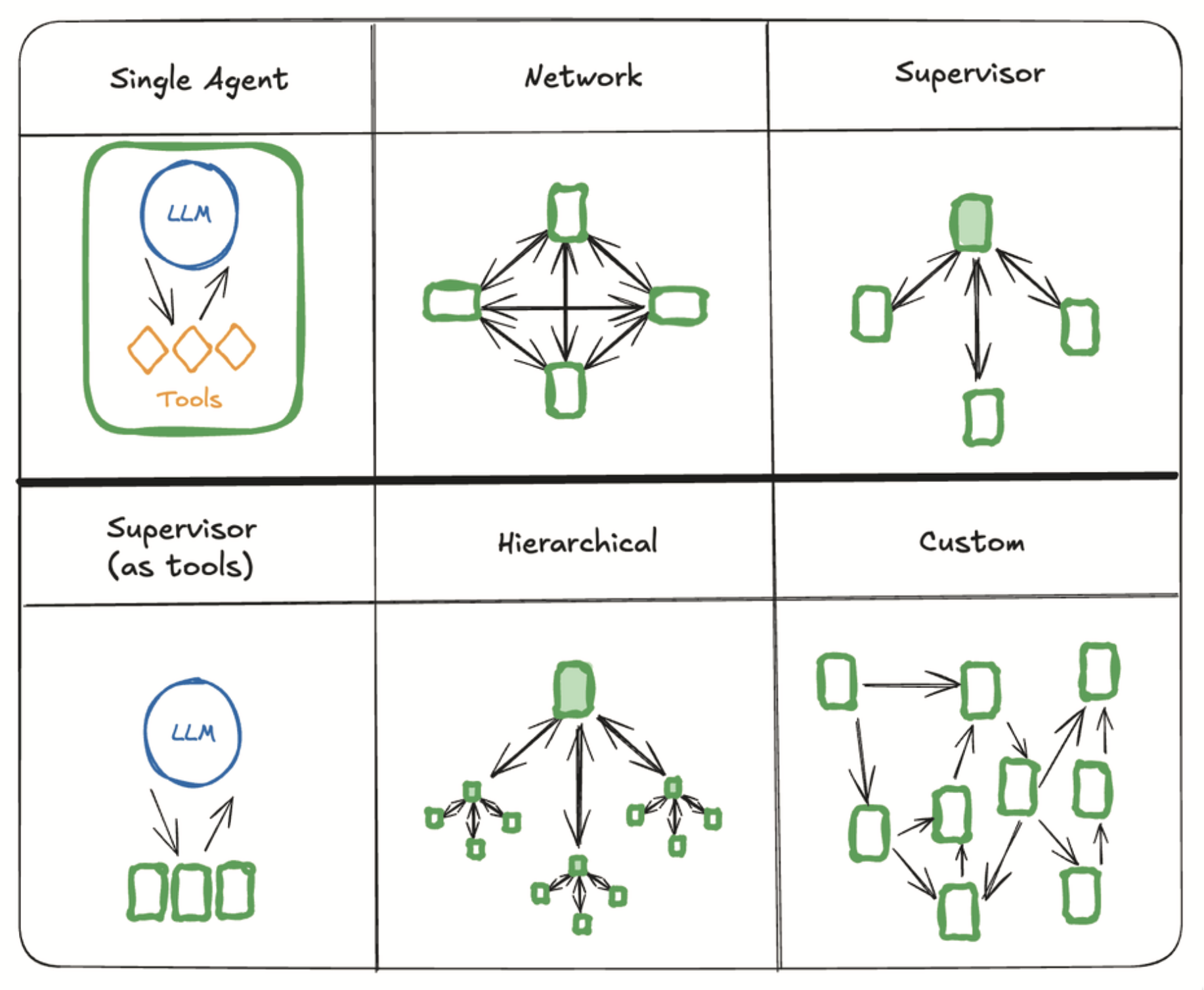
Principle of building AI agents, Sam Bhagwat
Case study: maritime and fisheries
Illegal fishing detection in the Mediterranean
User asks: "Detect vessels fishing illegally in EU waters."
Tools:
- ESA Sentinel-1 SAR → vessel detection
- AIS data integration → match vessels with AIS signals
- Vector analysis tool → cross-check with legal fishing zones
- Routing tool → closest coast guard patrols
Output: alerts and patrol coordination. The analyst gets actionable results, not a stack of intermediate files to interpret manually.
Workflow: Sentinel-1 SAR → AIS integration → vector analysis → routing.
What we covered
- What is an agent?
- What are tools?
- What is a workflow?
- What is a multi-agent system?
- What are examples of Earth Observation agents?
What's next
Open problems and active areas of work:
- Context length: fitting larger EO workflows and datasets into agent memory
- MCP, A2A, RAG, vector DBs: standard protocols and retrieval over spatial data
- Multi-agent systems: orchestration at scale across specialised EO agents
Birds of a Feather: Towards an Open Ecosystem
Alongside the talk, we hosted a 60-minute BoF session, AI Agents for Earth Observation Analytics: Towards an Open Ecosystem, with EO practitioners, AI/ML researchers, data scientists, and developers from across the conference.
The goal was a working session, not another presentation: start a community effort to develop specifications for EO AI agents, so tools, frameworks, and workflows can interoperate rather than each team building in isolation.
What we discussed
Participants mapped the current landscape: what agent tools and frameworks people are already using, where interoperability breaks down between EO systems, and which specification gaps hurt most in practice.
Four core specification areas emerged as priorities:
- Agent interface standards: APIs, protocols, and data formats for how EO agents expose capabilities and exchange messages
- Tool integration specifications: plugin architecture, capability discovery, and consistent wrappers around GDAL, STAC, vision models, and the rest of the EO stack
- Workflow definition standards: how multi-step pipelines are described, executed, monitored, and recovered when something fails
- Metadata and testing: agent capability descriptions, versioning, backward compatibility, and validation frameworks so implementations can be verified against the spec
The technical discussion covered agent topologies (hierarchical, peer-to-peer, federated), communication patterns (message passing, event-driven, REST/GraphQL), and alignment with existing EO standards (STAC, OGC, OpenAPI) rather than reinventing what the community already has.
EO Agent Specifications Working Group
The BoF proposed forming an EO Agent Specifications Working Group with a clear charter:
| Area | Focus |
|---|---|
| Specification Development | Core technical specs for agent interfaces, tools, and workflows |
| Community & Outreach | Engagement, adoption, and contributor onboarding |
| Testing & Validation | Compliance frameworks and reference implementations |
| Documentation & Education | Guides, examples, and training resources |
Governance would follow an open contribution model: a steering committee of key stakeholders, focused technical working groups for each spec area, and a community advisory board for broader input.
Roadmap
The group outlined an initial deliverable timeline:
- Month 3: Core specification framework
- Month 6: Agent interface standards (first draft)
- Month 9: Tool integration specifications
- Month 12: Reference implementations
- Month 15: Testing and validation suite
Immediate next steps include setting up communication channels, a shared repository with contribution guidelines, and scheduling the first working group meeting.
Get involved
If you attended the BoF in Riga or are reading this from elsewhere, we are building an open EO agent ecosystem and welcome collaborators.
If you work on agentic EO systems, build tools that agents should call, or care about interoperability standards for spatial AI, get in touch. Join our newsletter for working group updates.