Rethinking Roofs: Cooling Homes in Informal Settlements with What Already Exists
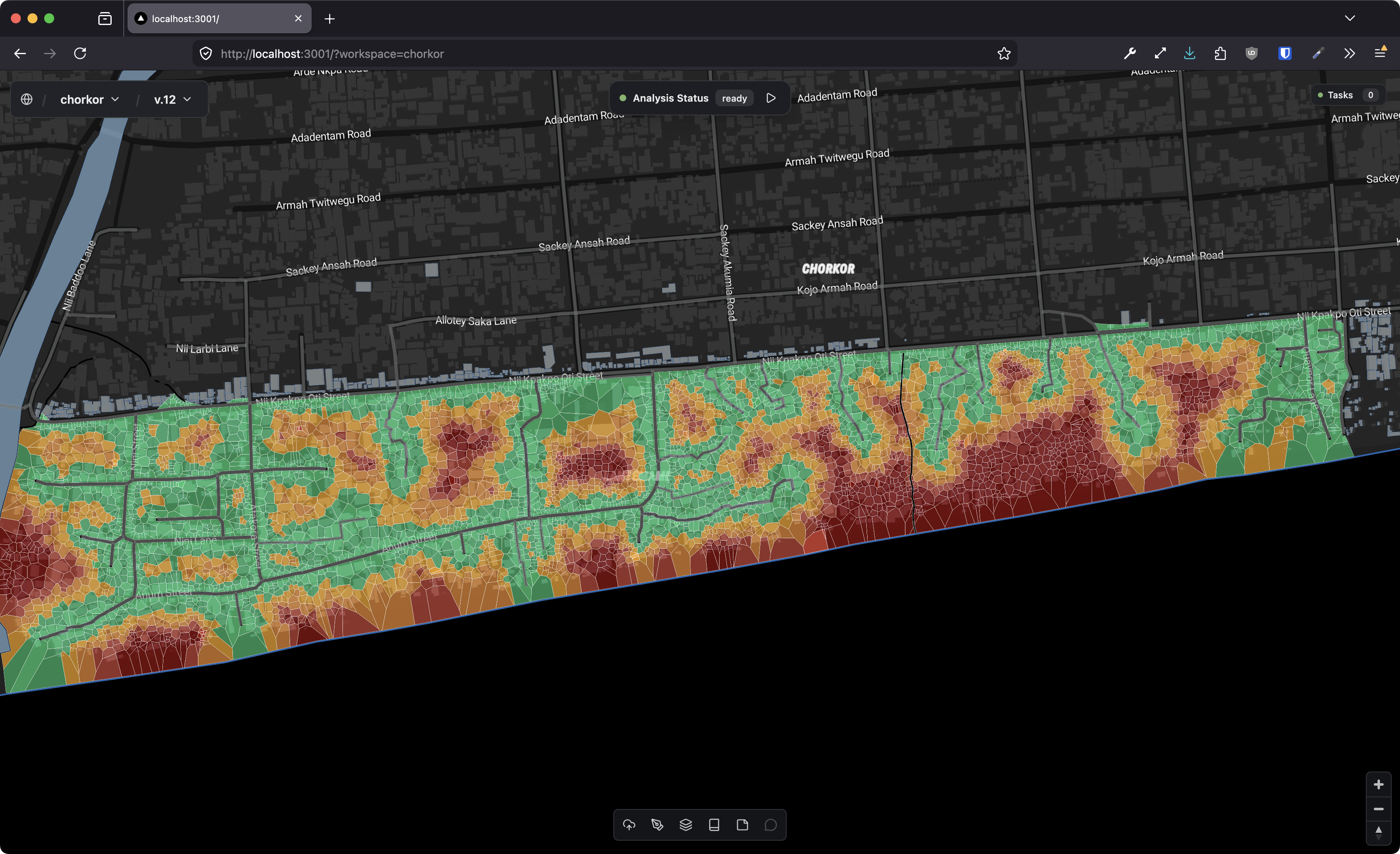
In Kroo Bay, Freetown, 91% of homes have corrugated zinc or metal roofs. On a hot afternoon, those roofs turn living spaces into ovens — temperatures inside can exceed outdoor air temperatures by several degrees. The people most affected are women and young children, who spend the most time indoors.
We entered the Rethinking Roofs global competition — organised by SDI (Shack/Slum Dwellers International) and IIED — with a simple premise: don't replace what people have. Work with it.
Stage 2 Submission
The Toolkit
Together with architect Rayane Djaffafla, we designed three complementary strategies that communities can choose from based on their structure, ownership status, and available space.
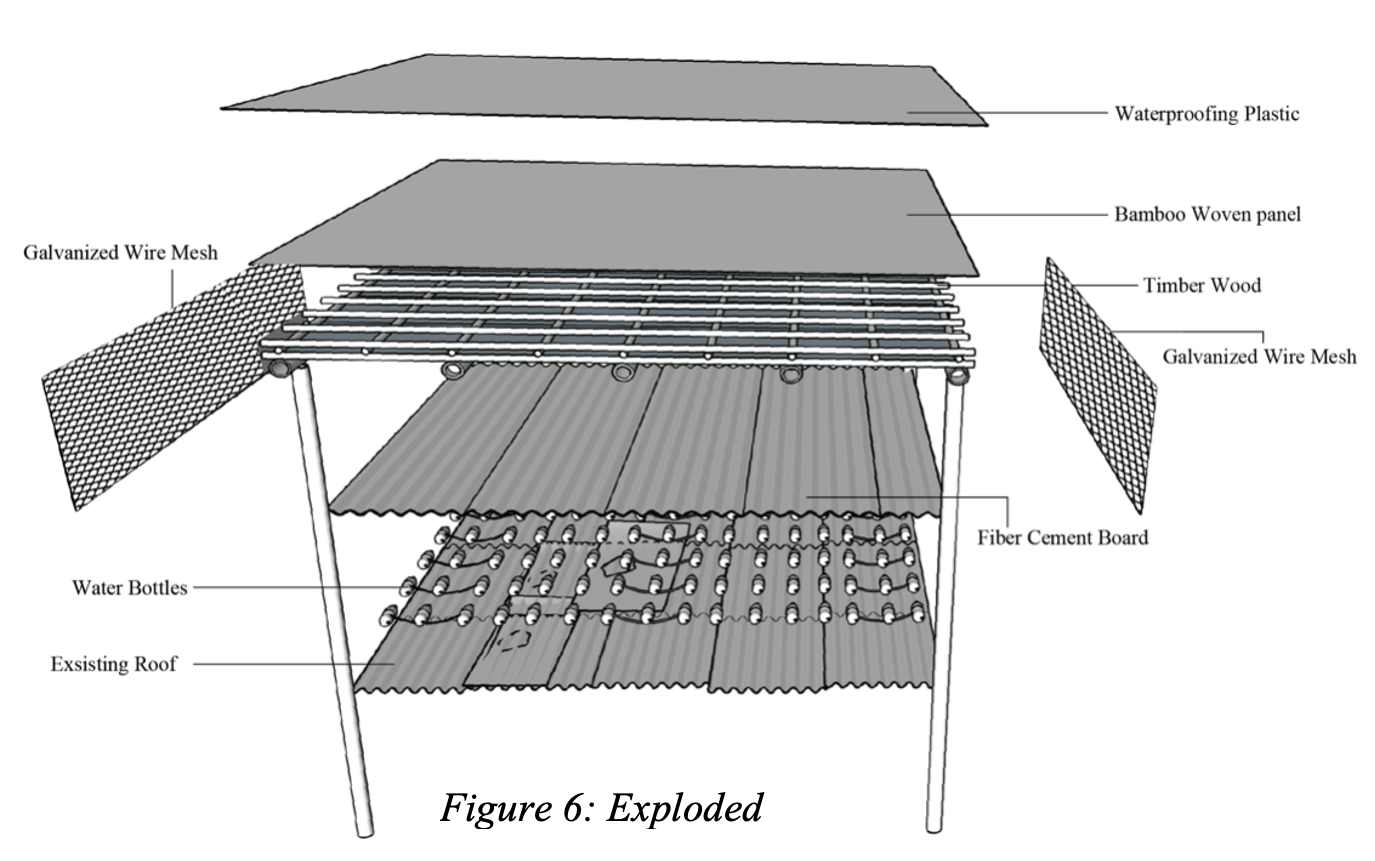
Alt 1 — Layered Cooling Roof
A shading mat sits above the existing metal roof, held by ballast (no drilling, no damage). A 150–300mm ventilated air gap lets hot air escape before it radiates into the room below. Blocks 60–80% of direct solar load. Best for owner-occupied homes with solid structures. Cost: ~$750/dwelling.
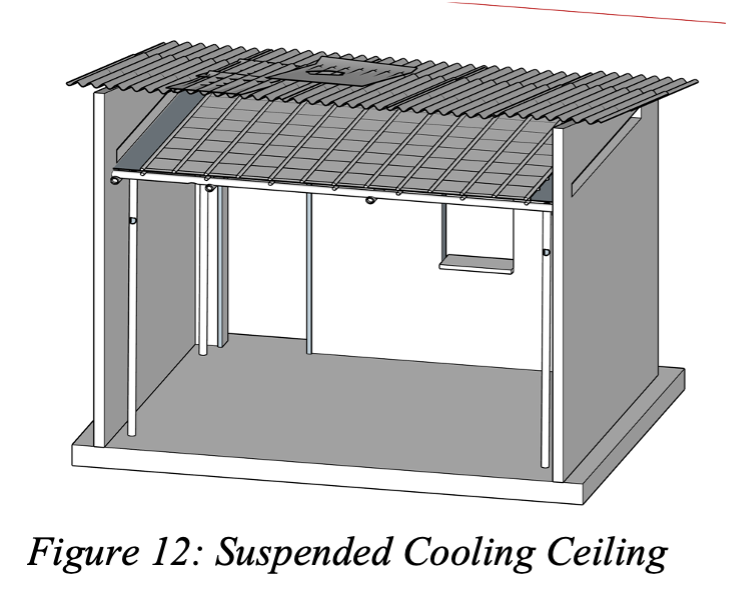
Alt 2 — Suspended Cooling Ceiling
A woven panel suspended below the metal roof creates a thermal buffer entirely inside the room. No work on the roof at all — ideal for renters or fragile structures where adding roof weight is a risk. Installed room by room. Cost: ~$450/dwelling.
Alt 3 — Detached Canopy
A community-owned shade structure for courtyards and shared spaces, anchored with gabions (wire mesh filled with local stone) — no foundations, no land title required. Can carry solar panels. Cost: ~$650 serving 3–6 dwellings.
All three are lightweight, relocatable, and designed for incremental rollout so households can spread costs over time.
Choosing the Right Intervention
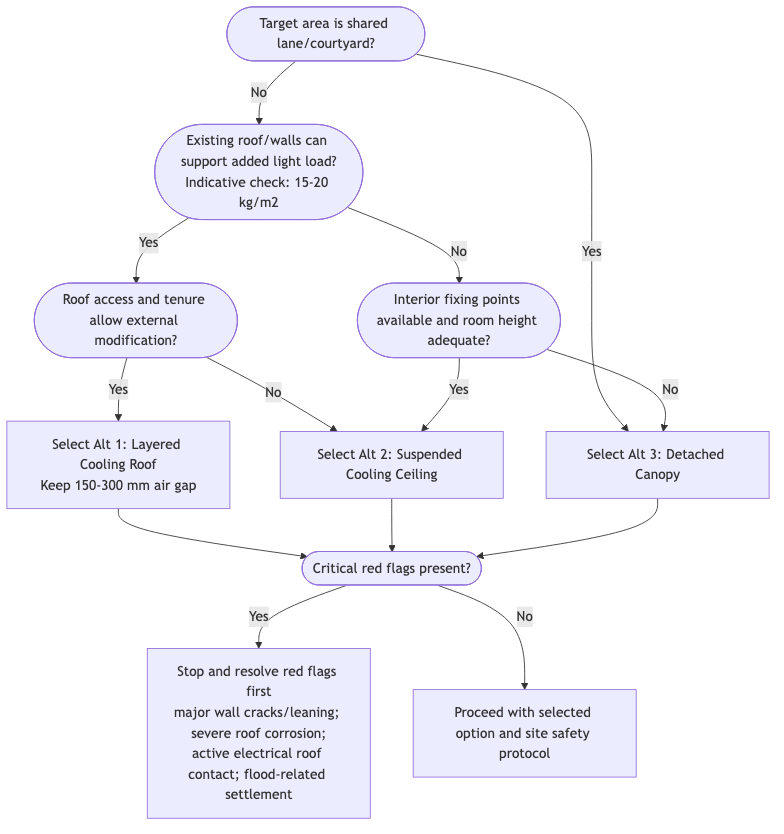
A decision framework matches each household's context — structural capacity, tenure status, space type — to the right alternative. No field expertise required to use it.
Climate Context
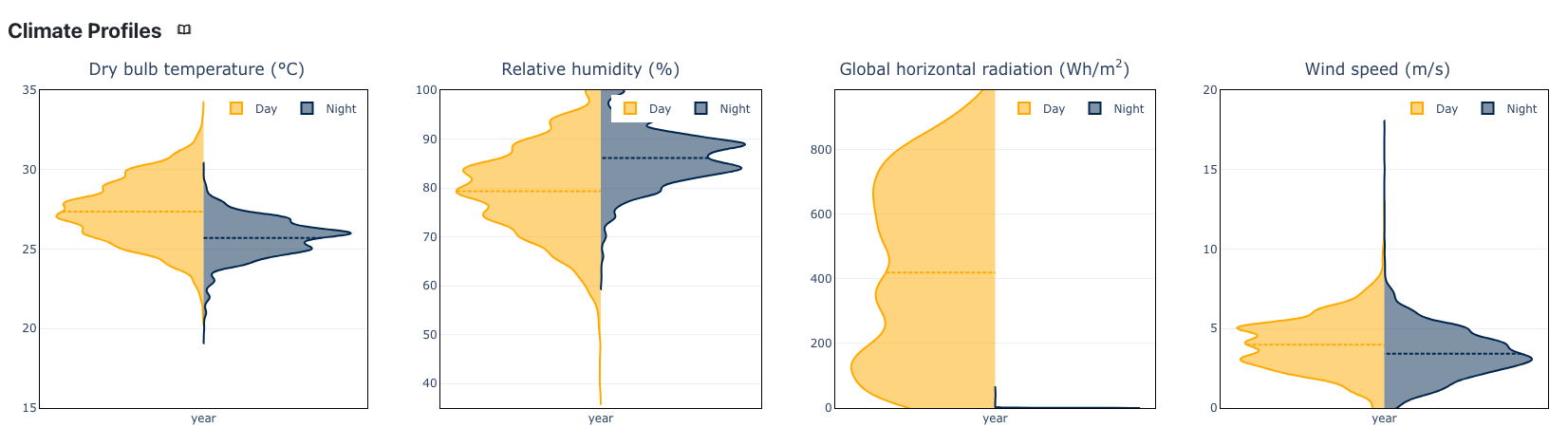
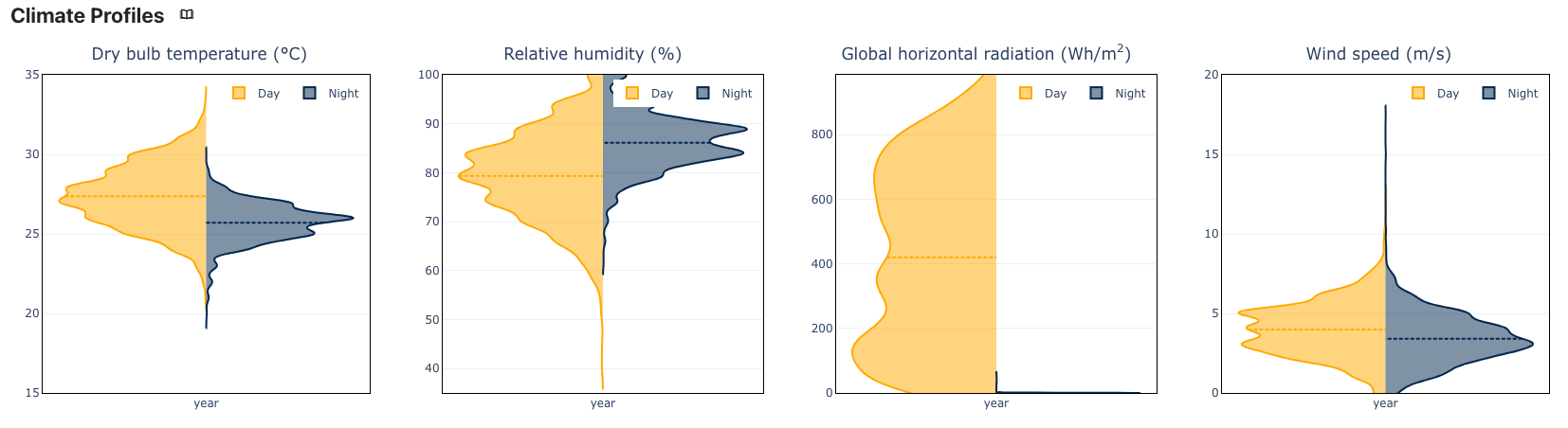
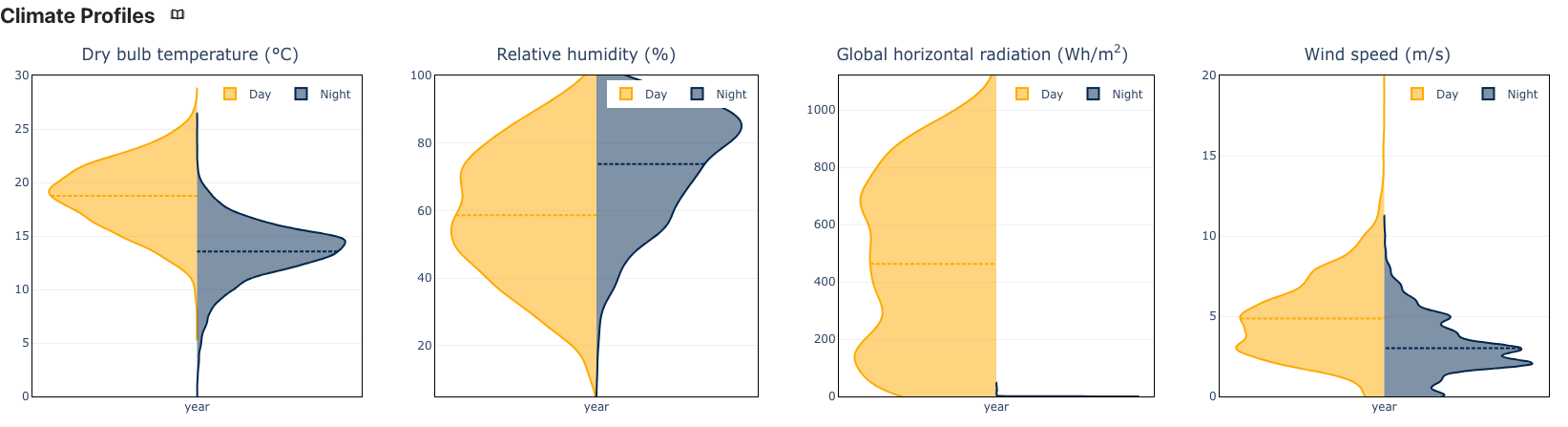
The three cities were chosen to represent different climate stress profiles across sub-Saharan Africa. The charts below show annual distributions of dry bulb temperature, relative humidity, solar radiation, and wind speed — the four variables that drive how much heat a roof absorbs and how much it can shed.
Freetown, Sierra Leone and Accra, Ghana present near-identical heat stress profiles. Both are hot-humid West African coastal cities: day temperatures clustered around 28–30°C year-round, humidity persistently in the 80–90% range, and strong solar radiation with almost no overnight relief. If a roof bakes in Freetown, it bakes the same way in Accra. The main difference is Accra has two distinct wet seasons and slightly more variable wind — which matters when you're relying on ventilation gaps to shed heat.
Addis Ababa, Ethiopia is the contrasting case. Temperatures are cooler overall (median closer to 18°C) and humidity drops sharply — but solar radiation is actually higher, peaking above 1000 Wh/m², because the altitude means a thinner atmosphere and more intense sun. Wind is gustier and more variable. The result is a different kind of thermal problem: intense daytime solar gain followed by a cool night, rather than the relentless humid heat of West Africa.
Impact
Climate simulations across three cities — Kroo Bay (Freetown), Alogboshie-Achimota (Accra), and Kirkos (Addis Ababa) — point to 3–5°C reductions in peak indoor temperature. That gap is the difference between sleeping and not sleeping, between a child being able to study and not being able to.
Beyond thermal comfort: the interventions also address fire risk (covering exposed metal edges), pest control (mesh vents block rodents and insects), and create visible value in roof infrastructure that shifts community behaviour around maintenance.
Decision Labs' Role
Our contribution sat at the intersection of geomatics and systems design. We ran climate baseline analysis across all three cities using local weather data, used Geobase to process satellite and aerial imagery of each settlement, and modelled thermal performance with EnergyPlus to stress-test the temperature reduction claims before they went into the submission.
We also built the decision framework above — the logic that matches a household's structural capacity, tenure, and space type to the right intervention — and documented it as a reusable toolkit that any community organiser or architect can apply without us in the room.
For a closer look at the Accra site — housing typologies, local materials markets, and what the structures actually look like on the ground — see Field Notes: Accra.